Scott Martin

ContactScott Martin has been covering the financial markets since 1996 and the securities business since 2001. He was a long-time columnist for Research, market writer at CNNfn.com, and editor of Buyside; his work currently appears in publications like The Trust Advisor, Institutional Investor, and EmergingMoney.com.
read more ...

Health Savings Accounts Gain Traction edit
Tuesday, February 14, 2012 14:49

Tags: healthcare

After years of obscurity, health savings accounts (HSAs) are now being actively purchased by employers to help them manage benefit costs.

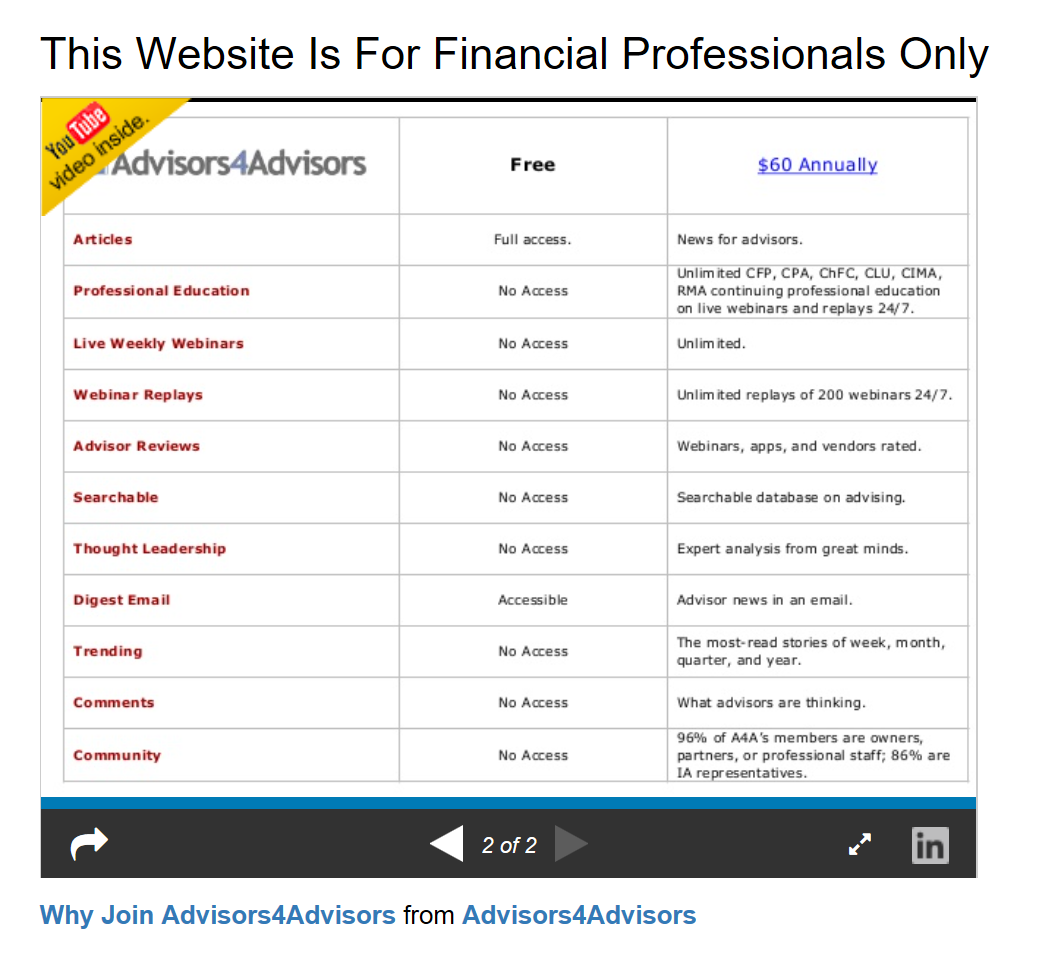
If you're a private wealth advisor, please join Advisors4Advisors (A4A) to get its full benefits.

Register now, and we will donate $20 of our $60 membership fee to Bubbles The Clown’s financial literacy program, and you can post an icon on your website saying you support Bubbles' 501(c)3 charitable organization.

Plus, get other membership benefits, including:

  • Analysis daily of issues affecting advisors
  • Aggregation of news from dozens of sites targeting wealth managers
  • Reviews by advisors of practice management applications
  • 30 independent experts blogging on advisor business issues
  • 24/7 access to webinars with 50 hours of CFP® CE and 100 hours of IMCA CE
Register Now


Bank of America and JPMorgan together, as two of the major advocates for the vehicles, currently administer around 1.1 million HSAs.


That's about 30% growth over the last 12 months and reflects, among other things, the rising cost of traditional employee health insurance and the looming start of various Obamacare reforms.


Like 401(k)s, HSA assets can theoretically be actively managed, which makes this a potential business opportunity for advisors who think they will be around for the long term.


Currently, banks have stepped up as the primary HSA managers, filling the accounts with in-house investment products.


Since these accounts are designed to be drawn down during an individual's working lifetime, average balances are still low -- on average, each participant has maybe $1,500 in his or her HSA -- so anyone looking to get into this market will need to find ways to achieve scale in order to be profitable.


If nothing else, offering HSA support as an add-on to small business consulting may be a differentiator for advisors who target entrepreneurs.


The assets may be at best an incremental boost to AUM, but they should prove sticky as business owners cope with new mandates to provide some form of health coverage.


Comments (0)

Write comment

You must be logged in to post a comment. Please register if you do not have an account yet.

busy
 

Login

Banner
Banner
Banner

Comments

Banner

Reviews

Banner